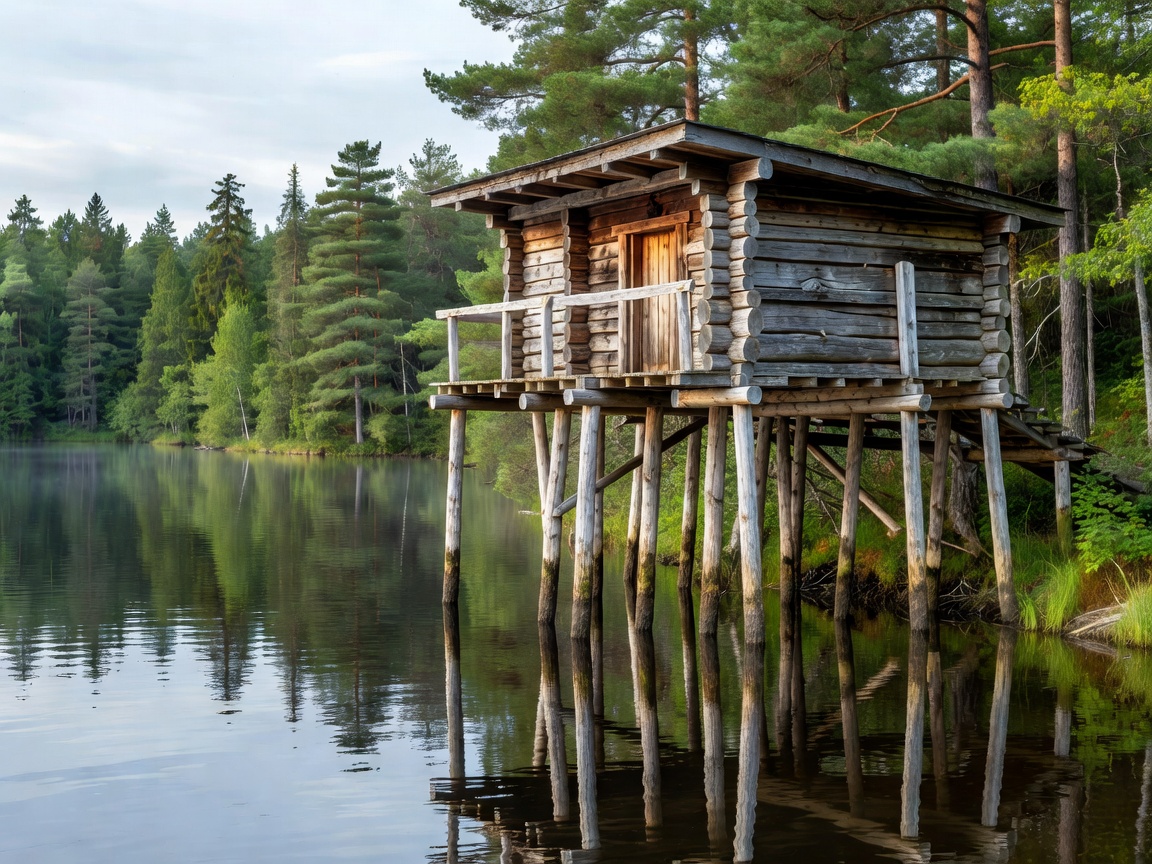
Architecture Meets Natural Topography
When Nordic carpenters build a sauna outpost, they study the prevailing winds before cutting a single foundation post. A sauna cabin needs warmth, but when you step out dripping with perspiration into a freezing gust coming off open water, the chill can shock your bronchial tubes before your body has had a chance to enjoy the contrast.
Good retreat design creates sheltered micro-climates: extended eaves that block falling sleet, wrap-around timber windbreaks, and sun-facing terraces that capture low late-afternoon rays even in late November.
Three Core Woodland Settings Compared
Every European forest retreat falls into one of three general landscape categories. Here is what you should expect from each regarding acoustics, privacy, and seasonal comfort.
1. The Glacial Lake Shore
Common throughout Southern Finland, Central Sweden, and the Scottish Highlands. The sauna structure typically connects to a wooden jetty with a submerged ladder.
The Great Advantage: Immediate plunge access. Stepping from steam directly into soft, mineral-rich freshwater is the gold standard of thermal bathing. The reflective lake surface also creates breathtaking morning light.
The Trade-offs: Insect activity can be intense between June and early August. In winter, strong winds across open ice can make the outdoor recovery walk bracingly harsh if there is no covered deck.
2. The Deep Conifer Hollow
Found in the Black Forest, the Vosges, and the taiga belts of Dalarna. The cabin is completely enclosed by mature Norway spruce or Scots pine, often perched near a trickling rocky stream or natural plunge pool.
The Great Advantage: Unrivaled acoustic silence. The needle-carpeted ground and dense tree trunks absorb sound waves, creating a quiet so profound you can hear sap dripping. Excellent wind shelter year-round.
The Trade-offs: Shorter daylight hours beneath a dense evergreen canopy. Plunge options are typically cold wooden tubs, outdoor gravity showers, or shallow mountain streams rather than deep swimming.
3. River Valley and Mountain Glade
Prevalent in the Bavarian foothills, Austrian Carinthia, and Slovenia's Julian Alps. Timber cabins set on gentle grassy slopes overlooking swift alpine waterways.
The Great Advantage: Flowing, oxygenated alpine water that stays cold throughout the height of July and August. Expansive panoramic views of surrounding peaks while resting on the deck.
The Trade-offs: Rapid weather shifts. Mountain breezes can drop temperatures by 15°C within two hours during afternoon storms, requiring adaptable clothing and reliable cabin firewood reserves.
Privacy, Sightlines, and Retreat Etiquette
In traditional sauna culture, modesty is relaxed, but emotional comfort depends entirely on privacy. When booking or evaluating a woodland hideaway, check aerial maps or ask whether sightlines exist from public footpaths, adjacent rental units, or boat channels.
A properly placed forest sauna utilizes natural berms, rock outcroppings, and dense shrubbery so that bathers can step outside completely unencumbered without worrying about hikers or passing rowboats. True relaxation is impossible if you are subconsciously scanning the perimeter every time you take a breath of fresh air.
Access Roads, Winter Parking, and Logistics
It is easy to fall in love with photographs of an isolated cabin surrounded by virgin snow, but you must factor in real-world access logistics:
- Gravel Forest Tracks: Unpaved logging roads may become impassable mud pits during spring thaw (known in the north as kelirikko). Ensure your rental vehicle has adequate ground clearance.
- The Luggage Haul: If parking is 400 meters away at a track head, how will you transport provisions, warm boots, and drinking water? Properties that provide pull-sleds or wheelbarrows show thoughtful host planning.
- Emergency Egress: In high-snow regions, make sure you know who is responsible for plowing the access road if an overnight storm drops forty centimeters of fresh powder.
Matching the Setting to Your Desired State
If you are seeking active outdoor days with kayaking, open-water swimming, and big sky views, prioritize lakeside or river settings. If your primary aim is deep rest, contemplative journaling, or nervous system recovery from cognitive overload, choose a deep-canopy forest hollow. The trees offer a psychological sense of containment that vast open water simply cannot provide.